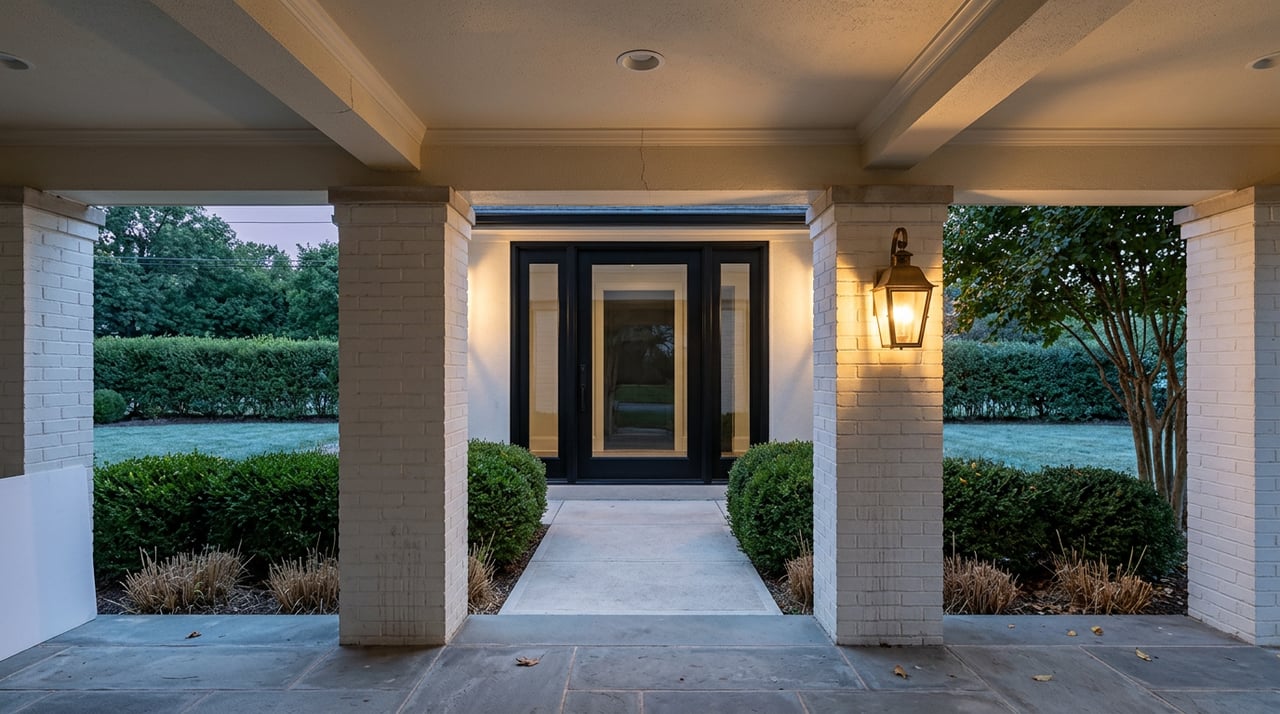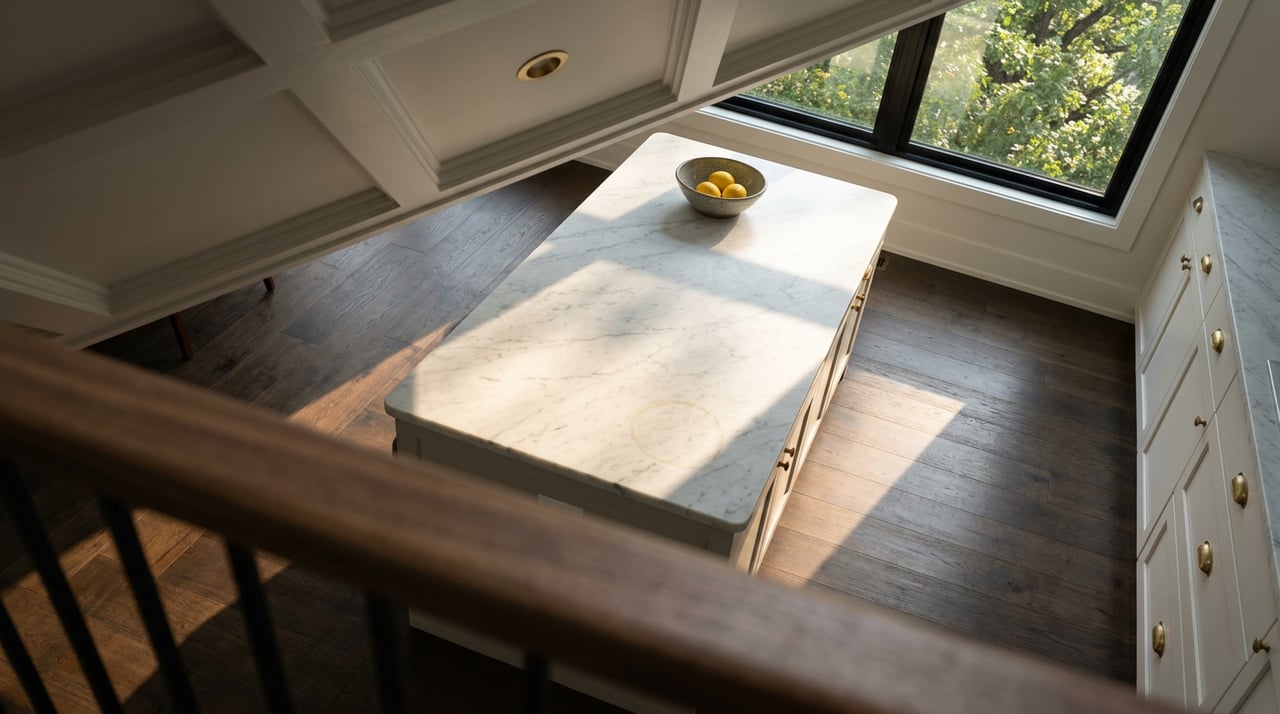
In August 2026, the range of active home prices in Victoria, Minnesota ran from $435,000 to $8.25 million. That is not a typo and it is not two different cities. It is one municipality, one MLS area, and increasingly, two very different housing markets that happen to share a mailing address.
If you've pulled up Victoria's median home price on a portal in the last year, you've likely seen a number somewhere between $525,000 and $630,000, depending on the day you looked. Both figures are real. Neither one tells you what a specific house will cost you. The gap between them is not noise in the data. It's the story.
The Number That Won't Sit Still
Here is what the reported median has looked like across three separate snapshots in the past two years:
| Source and time window | Reported median | What it's measuring |
|---|---|---|
| Citywide portal data, August 2026 | $525,000 | Blended median across all closed home sales |
| NorthstarMLS-based local market report, November 2025 | $629,000 | Monthly median sale price, up 21% year over year for that month |
| Lakefront-focused market summary, 2024 | "Exceeds $600,000" | Median skewed toward waterfront and established-neighborhood sales |
That same August 2026 portal data also broke out single-family detached listings on their own. Isolate just the detached homes and the median list price jumps to $587,500, a full $62,500 above the blended citywide figure of $525,000. The average sale price for all of Victoria that same month sat at $594,442, nearly $70,000 above the median. When the average sits meaningfully above the median in a single month of data, that's a signature of a market with a long tail of high-end sales pulling the mean upward while a growing base of lower-priced closings pulls the median down.
None of this means Victoria's market swung wildly in a matter of weeks. It means the mix of what's closing has changed, and the mix is doing more work than the trend line.
Why a Shoreland Overlay Decides More Than a Buyer's Preference Does
Victoria has built its reputation on large lots, mature trees, and lake proximity. Historically, more than 80 percent of its housing stock has been single-family detached, according to the city's own comprehensive plan. That reputation is still true of large stretches of the city. It is not true of what's currently being entitled on some of the last remaining developable land.
Look at the David Weekley Homes proposal along Church Lake Boulevard. The site is roughly 20 acres, currently zoned for low-density single-family residential. The developer isn't asking to build more of that. The application seeks a rezoning to allow 6 to 12 units per acre for 94 row townhomes. Why not simply plat detached lots the way the zoning already allows? Because the parcel sits inside the city's Shoreland Overlay District and carries a 100-foot-wide pipeline easement, two constraints that, according to the city's own project notes, make the site difficult to develop at a lower density. In plain terms: the land itself won't support the large-lot product Victoria is known for. Density becomes the only economically workable path, not a builder's preference.
Compare that to what Charles Cudd Company has done at Huntersbrook Creekside and Shores of Marsh Lake, both south of Marsh Lake Road. City planning records describe both developments as substantially complete, with home construction already underway on 42 single-family lots and an HOA that handles lawn care, landscaping, and snow and trash removal. A second addition proposing five more matching lots around a new cul-de-sac won final approval from the city on June 8, 2026. Same city, same builder, completely different product, because the underlying land doesn't carry the same environmental constraints Church Lake Boulevard does.
This is the mechanism worth understanding if you're comparing Victoria to another suburb: the split between attached and detached new construction here isn't primarily about what buyers want. It's about which parcels can still legally support a single-family lot and which ones can't. As the easier sites get built out, expect the harder, more constrained parcels, and the attached product that comes with them, to make up a larger share of what's newly available.
Two ZIP Codes, Two Markets
Local market reporting on Victoria has started splitting its own analysis by ZIP code, comparing the 55386 core against the 55331 pocket, specifically because a single citywide comp set blends neighborhoods that don't behave the same way. That's an unusual level of granularity for a city of roughly 12,000 residents, and it exists because the alternative, a single blended number, misleads more than it informs.
The practical version of this split shows up in the new construction pipeline itself. Birchwood at Marsh Hollow, a townhome community from M/I Homes off Victoria Drive, has quick move-in units priced from $385,500 and selling now. That's nearly $140,000 below the blended citywide median and more than $200,000 below the isolated single-family median. Meanwhile, West Creek Village, a Lennar project approved by the City Council in June 2025 and calling for site grading ahead of construction originally targeted for spring 2026, is planned as a mix of 18 twinhomes, 56 townhomes, 23 villas, and only 13 single-family homes, a ratio that tells you where builder economics currently point on that particular site.
If you're comparing a Birchwood quick move-in to a resale on a mature lot near Steiger Lake or Lake Auburn, you're not comparing two options in the same market segment. You're comparing two different products that happen to share a ZIP code, sometimes even the same school boundaries.
What This Means If You're Actually Shopping Here
The practical move is to stop asking "what's the median in Victoria" and start asking two narrower questions instead.
First, what's the median for this product type, in this pocket. A detached home in an established Victoria neighborhood is tracking closer to the $587,500 to $629,000 range depending on the month and the mix of lakefront closings. A new attached townhome is tracking closer to the $385,500 to $525,000 range. Those aren't two ends of the same spectrum you can average together and act on. They're two different shopping lists.
Second, ask what's actually driving supply on the specific parcel or development you're looking at. If a new community sits on a shoreland-constrained or easement-burdened site, expect attached product and expect it to keep coming, because the land dictates the outcome more than the builder's marketing does. If it sits on an unconstrained parcel, as Huntersbrook Creekside and Shores of Marsh Lake do, expect single-family lots to keep being platted there for as long as that kind of land remains available, which, given how development has already claimed the easier sites, may not be indefinitely.
None of this should read as a caution against Victoria. The inventory data itself argues the opposite. Birchwood's quick move-in homes are already selling, and the rolling 12-month pricing trend that NorthstarMLS-based reporting captured through November 2025 showed inventory at 2.8 months, a level that still leans toward sellers without being frenzied. Buyers have room to be selective. They just need to be selective within the right comparison set, not against a citywide median that's quietly averaging a $385,000 townhome against an $8 million lakefront estate.
If you're weighing Victoria against another southwest metro suburb, or trying to figure out whether a specific new-construction price makes sense against what's actually sold nearby, that's a conversation worth having before you make an offer, not after. Steve Pemberton has spent decades reading exactly this kind of local nuance into pricing strategy, and can walk you through which Victoria you're actually comparing, and what that means for your number.